Sunday, September 22, 2013

Journalism in Classic Film Blogathon: Deadline – U.S.A. (1952)


The following essay is Thrilling Days of Yesteryear’s contribution to the Journalism in Classic Film Blogathon, currently underway this weekend (September 21-22) and hosted by Comet Over Hollywood and Lindsay’s Movie Musings.  For a full list of the participating blogs and the classic “read all about it” movies covered, click here.  (Warning: this review has spoilers.)


In the bustling newsroom offices of The Day, a major metropolitan newspaper, managing editor Ed Hutcheson (Humphrey Bogart) is sandbagged by an AP wire report announcing that the paper is going to be sold to a competing tabloid by the heirs of The Day’s founder, John Garrison.  Hutcheson attends a meeting in an upstairs conference room and finds the story confirmed by Garrison’s widow Margaret (Ethel Barrymore) and her daughters Alice (Fay Baker) and Katherine (Joyce Mackenzie).  Despite the news, Ed still has a paper to get out; investigative reporter George Burrows (Warren Stevens) wants to continue probing the affairs of racketeer Tomas Rienzi (Martin Gabel), who’s been on the hot seat of late testifying before a state senate committee.  Ed is positive that if the committee hasn’t uncovered anything, neither will The Day; Burrows assures him he’s got a hot lead, and is given an extra three days on the story.

I don't know the actor playing the man tending bar but Deadline - U.S.A. shows off its acting talent in this photo with (l-r) Jim Backus, Paul Stewart, Bogie, Dabbs Greer and Barton Yarborough.
The newspaper’s staff holds a “wake” at a local watering hole that evening in observance of the paper’s demise, and afterwards a drunken Hutcheson finds his way to the apartment of his ex-wife Nora (Kim Hunter).  Ed tells her about the paper’s impending sale and promises her that if they get back together things will be different between the two of them.  The next morning, Ed gets a call from the paper—Burrows has suffered a beating at the hands of some of Rienzi’s goons, and will have to be hospitalized…possibly even losing an eye.  This prompts Hutcheson to step up the paper’s investigation into the gangster’s activities, pulling out all the stops with a hard-hitting Page One editorial and cartoons to accompany it.  Ed’s gamble is that with the spotlight shining on Rienzi, it might just be the solution to keep the paper from being sold.

When the Rienzi story is published, the subject of the article is naturally none too pleased and informs his lawyer that he wants pressure put to bear on Hutcheson.  Ed has problems of his own, however; his attempts to reconcile with Nora are not going as well as he’d like (she announces that she’s engaged to be remarried), and a breaking story about a dead woman found drowned and wearing nothing but a mink is spiked by Fenway (Thomas Browne Henry), the advertising manager.  Questioning Fenway, Hutcheson and city desk editor Frank Allen (Ed Begley) learn that the story has been scotched because Andrew Wharton (Tom Powers), one of the paper’s major advertisers, is concerned about the gossip that will get out when readers learn that the dead woman, one Sally Gardner (real name: Bessie Schmidt), was once his mistress.

Wharton helpfully informs Hutcheson that Sally was blackmailing him…but stopped when she hooked up with none other than Tomas Rienzi.  Jim Cleary (Jim Backus) and sports editor Harry Thompson (Paul Stewart) are assigned to dig up the dirt; Cleary finds the evidence that connects Sally to the gangster, but Thompson locates her brother Herman (Joe De Santis) in a dingy apartment and convinces him to talk to The Day before Rienzi gets to him.  Meanwhile, at a court hearing that will approve the sale of The Day, Margaret has second thoughts about signing off on the deal, much to her daughters’ disgust.  Outnumbered two to one, Margaret’s only course of action is to offer to purchase the paper herself…and the judge decrees that he’ll need time to consider her request.

Outside the courthouse, Ed is taken for a “ride” in Rienzi’s car for a little chat; Rienzi makes every attempt to persuade Hutcheson to drop his crusade, but Ed holds firm, and the editor is deposited at the front steps of The Day just in time for Rienzi to see Herman walking in with Thompson.  A Q-and-A session with Ed and Frank reveals that brother Herman was the one who fingered where his sister was hiding and was also with Rienzi when the mobster’s thugs rubbed her out.  Schmidt, promised $1,000 for his story, is encouraged to take it on the lam…but a group of “cops” show up to collect the stoolie before he’s finished signing a statement as to what he witnessed.  The policemen are the same Rienzi goons who killed his sister, and after a scuffle, Herman meets a violent end when he falls into one of the paper’s printing presses. 


With no statement from the dead man and a libel suit threatened by Rienzi, the judge’s decision comes down: the contract is valid and the sale of The Day will continue, despite Hutcheson’s last-ditch attempt to convince the presiding judge of the paper’s importance and how “without competition, there can be no freedom of the press.”  Reporting back to Allen that the paper has been officially sold, Ed learns that the mother (Kasia Orzazewski) of the dead girl wants to speak to him—she has in her possession $200,000 of Renzi’s money and a diary kept by her daughter that will convict the mobster of complicity in her death.


The Day, though still being sold, scores a pyrrhic victory at the film’s end when Rienzi telephones Ed and, against the advice of his attorney, once again threatens him not to print the story in the paper’s final edition.  The printing presses start up, drowning out the conversation between the two men.  “That’s the press, baby…the press,” gloats Hutcheson to Rienzi.  “And there’s nothing you can do about it!”

Esquire political blogger Charles P. Pierce composed a post back in August of 2012 naming his three favorite “newspaper” movies—and encouraged his readership faithful to do the same.  We differ on our choices for number one (Charlie went with His Girl Friday, I personally prefer Ace in the Hole) but our number-two choice was Deadline – U.S.A. (1952).  The movie, released to theaters in March of 1952, has since ended up on a lot of favorites lists…truth be told, I myself might move it up to the top spot depending on what day of the week you ask.

I’m a big fan of Deadline because it approaches the subject of journalism and newspapers with a healthy mix of both idealism and cynicism.  The cynical portion of the film rings true today: viewers will have no problem identifying with the central plot, in which a once-great newspaper is on its deathbed, scheduled to be sacrificed to its tabloid-like competitor.  A certain Australian media mogul (Okay, it’s Rupert Murdoch—just don’t say his name three times in succession in front of a mirror in a darkened room) has done that with several established publications in the United Kingdom (The Sun, The Times) and United States (The New York Post, The Wall Street Journal).  The idealism resides in the fact that we’d like to believe that newspaper editors like Humphrey Bogart’s Ed Hutcheson are still around today: an individual who understands that the job of a paper is to “comfort the afflicted and afflict the comfortable” (a phrase made famous by humorist Finley Peter Dunne, though others—including W.E. “Ned” Chilton III, the legendary editor of The Charleston Gazette—have used that phrase a lot as well).

The idea for Deadline seems to have come to writer-director Richard Brooks from two separate newspapers.  In Tough as Nails, a biography on Brooks written by Douglass K. Daniel, the author claims that Brooks based the decision to sell the paper by the heirs of The Day on real-life events involving The New York World, which closed in 1931 after the sons of Joseph Pulitzer wanted to sell the paper rather than see it continue.  The New York Sun, which stopped its presses in 1950, also provided inspiration for Brooks’ screenplay (originally called “The Night the World Folded” and “The Newspaper Story”); its longtime editor Benjamin Day, would see his last name borrowed for the film’s fictional publication (and not the New London, Connecticut paper that shares the same name).  To prepare for his role as Hutcheson, Bogie began hanging out with reporters at the The New York Daily News…who lent its printing plant and newsroom for some of the movie’s location shooting.  All of this lends an authentic feel to the over atmosphere of the film, and the opening scene—with the mobster Rienzi assuring his inquisitors “I’m in the cement and contracting business”—echoes the recent events of the Kefauver hearings into organized crime (which turns up in several movies of that era, including The Captive City and The Turning Point).

There is endlessly quotable dialogue in Deadline, and much of it rings true today.  My favorite scene in the film is the “wake” held by The Day staff upon learning of the sale, as each reporter stands up (as if at a revival meeting) and “testifies”:

ALLEN: I see the light, Brother…
(The crowd breaks out in a chorus of huzzahs and hallelujahs)
THOMPSON: Purify your soul, sinner!
ALLEN (holding up a copy of The Standard): Save your tears…this is what the readers want…
CLEARY (as the others drown Allen out with catcalls): Throw the atheist out!
ALLEN: Don’t sell it short—it’s got twice our circulation and three times our advertising lineup…
(Hutcheson takes the paper from Allen and stares at it)


THOMPSON: Well, it’s yellow…but it’s not exactly a newspaper…
CLEARY: It keeps its people working…
(More choruses of “Hallelujah”)
HUTCHESON: Well, maybe if I’d given you this kind of paper you’d still have jobs…there’s a place for this kind of sheet…
CLEARY: Where, Daddy?
HUTCHESON: All right, so it’s not your kind of paper…who are we putting out papers for?  You?  (Pointing to others off-camera) You?  You?  (Laughs) It’s not enough anymore to give them just news…they want comics, contests, puzzles…they want to know how to bake a cake, win friends and influence the future…ergo, horoscopes…tips on the horses…interpretation of dreams so they can win on the numbers lotteries…and if they accidentally stumble onto the first page… (Slamming the paper on the bar) News!

The actor playing Bellamy, the journalism student, would make a few more movies before deciding to work on the other side of the camera.  William Self would become the man in charge of 20th Century-Fox television in the 1960s, overseeing such hit shows as 12 O'Clock High, Lost in Space, Batman, Voyage to the Bottom of the Sea, Peyton Place and Daniel Boone.
After the “wake” winds down, Hutcheson is approached by a journalism student (William Self) who presents a letter of introduction from his professor and informs the editor that he wants to be a reporter.  In his typically cynical style, Bogie-as-editor peppers the greenhorn with questions—particularly when Johnny Journalism announces his intention to become a foreign correspondent—but after giving the kid his baptism by fire, tells him to come around and see him in the morning (he eventually is assigned to “rewrite desk, lobster shift”—Bogie’s secretary [Barton Yarborough] explains to the kid that they call it that because “after midnight, we serve lobsters—thermidor, naturally”)…and delivers the one line that stays with you after the picture is finished: “…about this wanting to be a reporter—don't ever change your mind.  It may not be the oldest profession, but it's the best.”

The man who wants to take Hutcheson's ex-wife with him to Albany.  Ed sees a picture of him in Nora's apartment and cracks: "I don't like him...I'll think of a reason later."
In a way, I can understand why His Girl Friday and Deadline – U.S.A. were Mr. Pierce’s choices for greatest and second-greatest newspaper movies; Deadline is really a more somber version of Friday.  Like Walter Burns pulling all the stops out to get ex-spouse Hildy Johnson back, Ed Hutcheson attempts to win back his estranged wife Nora even though it’s been The Day who’s acted as co-respondent throughout their marriage.  (As Barrymore’s Garrison says to Ed at one point in the film: “You wouldn’t have had a wife if that newspaper had beautiful legs.”)  Ed has even got his own Bruce Baldwin in the form of Lewis Schafer (played by Philip Terry, Ray Milland’s “good” brother in The Lost Weekend), whom Nora plans to marry (he’s her boss at the advertising firm where she works).  Ed gets a visit from Schafer (and like the Cary Grant-Ralph Bellamy scene in Friday, Bogie keeps holding Terry off at arms-length because of the office hustle-and-bustle), which allows him to give him the once-over…and when Lewis explains to Hutcheson that he’s there on behalf of protecting Nora he’s verbally cut off at the knees by Ed: “Well, that’s not only ridiculous, that’s insulting—you’re not that much of a prize.”  (Later, Ed asks the paper’s top researcher, Miss Barndollar [Florence Shirley], to go digging into Schafer’s background…and is disappointed when the investigation reveals his wife’s fiancé to be squeaky-clean.)

Like His Girl Friday, politics and corruption plays a huge role in Deadline – U.S.A.; the Rienzi storyline gives the movie sort of a noir feel but there’s also a suggestion that both elected officials and the police aren’t entirely on the up-and-up—Begley’s Allen is asked by a plainclothes detective investigating Herman Schmidt’s death: “Can’t you tell the difference between a hoodlum and a cop?”

The actress' name (Kasia Orzazewski) does not come trippingly off the tongue...but it's the same lady who plays the scrubwoman trying to free her son in Call Northside 777 (1948), another newspaper favorite here at TDOY.
“In this town?” Allen hesitatingly asks before deciding discretion is the better part of valor by replying “Yes, sir.”  The film’s admittedly deux ex machina ending also seems borrowed from His Girl Friday (the part where editor Burns muses that newspapers are protected by a “higher power”), in which an innocent babe-in-the-wood brings down the villain simply by being honest.  Deadline even has a hard-boiled female reporter in the Hildy Johnson mold; as played by Audrey Christie, she goes only by “Willabrandt”—but it’s her tenacious, patent-shoe-leather investigating that sparks the discovery of the connection between the dead Bessie Schmidt and gangster Rienzi.  She also has one of the loveliest moments in the movie, when she gets up to “testify” at the paper’s wake:

WILLABRANDT (looking at a copy of The Day, adorned with candles): It’s a lovely corpse…alas, poor dear—I knew it well…and why not?  I gave it the best fourteen years of my life…and what have I got to show for it, huh?  Eighty-one dollars in the bank…two dead husbands and… (Her voice softens) Two or three kids I always wanted, but never had… (Her voice rises) I’ve covered everything from electrocutions to love nest brawls…I’ve got fallen arches, unfixed teeth and…you wanna know something?  I…I never saw Paris…but I wouldn’t change those years… (Now choked with emotion) Not for anything in this world…

Christie is just one of the incredible cast of character performers in this film: there are tons of familiar TV faces and scads of recognizable voices for us old-time radio fans in the audience.  Barton Yarborough, who played the best damn partner Dragnet’s Joe Friday ever had made this movie his cinematic swan song, and you’ll also be able to pick out Parley Baer (as the headwaiter at the restaurant Bogie takes Kim Hunter), Willis Bouchey, Lawrence Dobkin (as the Rienzi lawyer), Dabbs Greer, Norman “Mr. Fenton” Leavitt, Tudor Owen and Frank Wilcox…plus so many others.  Ed Begley, Jim Backus (in a nice serious role with moments of levity), Paul Stewart and Joe De Santis are also first-rate…and I’m always tickled by Martin Gabel’s performance as the racketeer Rienzi because he looks more like an accountant (which was probably why he was cast; a man in his position would want to keep a low-profile)


The only flaw in the film is that outside of Christie's Willabrandt and Ethel Barrymore’s marvelous character, there aren’t too many strong female personages in the film; Kim Hunter is sadly wasted, though she does bring whatever she can to a thankless role…and it’s interesting to note that despite Nora’s weariness at having had to play second fiddle to The Day all those years she’s never wavered in her support of her ex-husband (she encourages him fiercely to pursue the Rienzi story with everything he’s got).  Nora informs her ex that she’s backed out of marrying Schafer, but whether or not there’ll be happy ending in their future is speculation by the audience. 


The movie is pretty much Bogie’s all the way (he was Brooks’ only choice even though the studio wanted Gregory Peck or Richard Widmark) though the experience of working with the actor wasn’t quite as pleasant for Brooks as it had been previously (Brooks co-wrote the screenplay for Key Largo).  The director later attributed Bogie’s difficulties and snappish behavior to Bogart’s gradual decline in health; an oft-told story has the actor throwing a star tantrum during the filming of a scene with Barrymore, with Bogart resisting the way Brooks wanted to stage the sequence.  Barrymore finally yelled at him “Humphrey, will you for Christ’s sake do it!”


“Why should I?” he snapped at her.  “Because Humphrey,” she replied, “the Swiss have no navy.”  Bogart broke up at this, and finally agreed to do the scene the director’s way.  Later, when Brooks confronted his friend in his dressing room, Bogie admitted that he’d been making rather merry with some friends the night before and hadn’t learned the speech in that scene.  He had been too embarrassed to admit it in front of the other cast members.

Despite the grief Bogart dished out on Deadline – U.S.A., it’s always been one of my favorites of his films (I know, it only seems that I say that about every Bogie movie); his weariness in the role (much of it left over from the demanding shoot that was The African Queen) helps to define his jaded character, a dedicated man who’s only got one more battle in him and he has to make it the best.  It’s interesting that this is the rare film where the chain-smoking actor never lights a cigarette (though he does reach for a pack in one scene before he’s interrupted), but Bogart demonstrates that one doesn’t need to smoke or carry a gun to be a tough guy; his character’s steeliness comes from the fact that he buys his ink by the barrel, and that he truly believes in the nobility of his profession.  As he tells the journalism student: “A profession is a performance for the public good…that’s why newspaper work is a profession.”

Wednesday, September 18, 2013

“Oh, boss…come now!”


Over at the Radio Spirits blog this morning, I wrote up a little birthday tribute to the one and only Eddie “Rochester” Anderson (born on this date in 1905)—comic sidekick/second banana beyond compare, and faithful “valet” to the one of the funniest men to ever walk the planet, as my friend Jeff was often fond of saying.  (That’s Jack Benny, in case you didn’t recognize him in the above photograph.)  Anderson also gets a shout-out via a scheduled ClassicFlix tweet now available at a Facebook or Twitter feed near you, so if you’re not already subscribing why not check it out?

Hot on the heels of the successful Gish Sisters Blogathon, Movies, Silently has another project underway in the ol’ blog kitchen—a ‘thon to celebrate the 88th anniversary of The Phantom of the Opera (1925).  The Chaney Blogathon (“Two men…thousands of faces”), underway from November 15-18 and co-hosted by TDOY fave The Last Drive-In, will cover the careers of Lon, Sr. and Lon, Jr.—Thrilling Days of Yesteryear will kick in with a review of one of my favorite Lon, Jr. turns: the 1952 western classic High Noon.  (After this event, Movies, Silently will enter a treatment program to kick their blogathon addiction.  Okay, I’m just kidding about that.)

Speaking of blogathons (smooth as glass), two film reviews that I wrote here for my BBFF Stacia’s Camp and Cult Blogathon, Seconds (1966) and The Court Jester (1956—in tandem with The Hollywood Revue’s Paramount Centennial Blogathon), have been nominated for two prestigious “CiMBA” awards, bestowed by that august organization of classic film bloggers known as The Classic Movie Blog Association.  To those folks who nominated TDOY—words simply cannot adequately express my gratitude; I know it sounds like a time-worn cliché but it really is an honor to be nominated.  Here’s the full list of nominees:

BEST CLASSIC MOVIE REVIEW: DRAMA
Scarface: The Shame of a Nation, Once Upon a Screen
31 Days of Oscar: The Rains Came (1939), The Lady Eve’s Reel Life
CMBA Fabulous Films of the 1940s Blogathon: My Darling Clementine (1946), Caftan Woman
The Black Cat (1934), Pre-Code.Com
The Camp and Cult Film Blogathon: Seconds (1966), Thrilling Days of Yesteryear

BEST CLASSIC MOVIE REVIEW: MUSICAL OR COMEDY
The Paramount Centennial Blogathon/The Camp & Cult Blogathon: The Court Jester (1956), Thrilling Days of Yesteryear
Barbara Stanwyck Blogathon: Ball of Fire (1941), Old Movies Nostalgia
Caftan Woman's Choice: One for December on TCM (Babes in Toyland, 1934), Caftan Woman
Review of The Doll (1919), Movies, Silently
Search for Beauty (1934), Pre-Code.Com

BEST CLASSIC MOVIE ARTICLE
Top 10 Oscar-Less Dames and Their Oscar-Worthy Roles, Shadows and Satin
Sunset Blvd...It IS Big!  Once Upon a Screen
Fashion in Film: Shanghai Express (1932), The Lady Eve’s Reel Life
The Man Who Saved Cinerama, Jim Lane’s Cinedrome
My Ten Favorite Classic Foreign Film Actors/Actresses, The Movie Projector

BEST PROFILE OF A CLASSIC MOVIE PERFORMER OR FILMMAKER
Happy Birthday, Olivia de Havilland! Backlots
Tyrone Power's Acting Lineage, Java Bean Rush
Julie Adams Chats with the Cafe about James Stewart, the Gill Man, Elvis, and Her Autobiography, Classic Film & TV Cafe
What a Character! Blogathon Canadian Edition: Miss Lucile Watson and Miss Maude Eburne, Caftan Woman

BEST BLOG DESIGN

BEST CLASSIC MOVIE SERIES (multiple posts)
TCM Pre-Code Pick of the Month, Shadows and Satin
Luck of the Irish: Darby O’Gill and the Little People, Jim Lane’s Cinedrome
Women Warriors, Another Old Movie Blog
Silent Take, Movies, Silently

BEST CLASSIC MOVIE BLOG EVENT
James Cagney Blogathon, The Movie Projector
Coverage of the TCM Classic Film Festival, Backlots

Worthy candidates, one and all—voting is now underway (it’s limited to CMBA members—so don’t try any funny business) and we should know the results by next Tuesday.  So good luck to the nominees!

And I hate to close this one out on a sad note…but yesterday, there was much buzz on the Facebook about the passing of a true Chicagoland legend: Jerry G. Bishop, the original Svengoolie, died this weekend at the age of 77.  R.I.P, Mr. Bishop.

Monday, September 16, 2013

Mother-Henning an idea for a post


As part of my ClassicFlix duties, I whip up a few birthday shout-outs to celebrity notables of the past on both Facebook and Twitter—today, for instance, actress-singer Janis Paige turns ninety-one…and I wrote a mercilessly short bio, mentioning a few of the movies that were graced by her amazing presence.

Sometimes there are people that I’d like to single out for mention but they get lost in the cracks—either because I’ve already got too many birthdays or I can’t find a decent photo of them on the Internets or in my collection.  Case in point: writer-producer Paul Henning was born on this date today in 1911.  The name is no doubt familiar to TV fans, since Henning was a major-type mogul in the world of television with series like The Dennis Day Show and The Bob Cummings Show (a.k.a. Love That Bob) to his credit…and then in the 1960s, executive producing the bucolic trilogy of The Beverly Hillbillies, Petticoat Junction and Green Acres.  Henning started out as a radio scribe; he cut his teeth assisting Don Quinn on Fibber McGee & Molly and then went to work for Joe E. Brown and Rudy Vallee before becoming Burns and Allen’s head writer in the 1940s (he also penned many of their TV scripts).

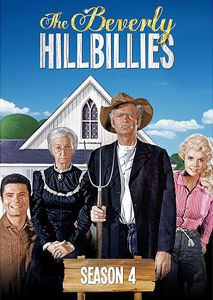
I bring up Paul Henning (and not just to make a bad pun in the title) because I got a pair of e-mails this weekend from TVShowsOnDVD.com announcing that the third season of Petticoat Junction and the fourth season of The Beverly Hillbillies are coming to DVD the first of October…in what are being termed “Walmart exclusives.”  Whether or not this means that the brick-and-mortar behemoth will be the only ones selling these sets I do not know; it may be one of those deals where the collections make their debut there before being released in a more inclusive fashion.  Still, I decided not to take a chance on this and so I ordered both sets, even though I will probably burn in a fiery hell for the rest of eternity shopping Walmart online.

Cultureshark proprietor Rick Brooks mentioned to me via Facebook that TSOD’s decision to announce the Hillbillies and Junction releases was influenced by a lively give-and-take at the Home Theater Forum, in which the webmasters from TSOD attempted to explain their decision not to give people a heads-up about the sets and were drowned out by loud cries of “Bullsh*t!”  I wasn’t aware of the fracas (any bulletin board that winds up driving Stephen Bowie away is probably not one I want to frequent) so I won’t labor over the details but I’m offering a doff of the TDOY chapeau to Messrs. Lacey and Lambert (The Men from T.S.O.D.) or TV Guide or whomever for changing their minds and letting folks know the news (again, I don’t frequent HTF as much as I did in the past because the administrator has a particularly annoying habit of curtailing people’s speech freedoms just when the conversation starts to get interesting).

There was a discussion on the HTF Beverly Hillbillies thread about the show itself and why it seems to have done so poorly with regards to DVD sales…particularly since it was the biggest thing to happen to CBS since they put I Love Lucy on the air.  There’s always been a stigma attached to the program—one I’ve never completely comprehended because I don’t think Hillbillies gets enough credit as being both a funny sitcom and a nice little slice of social satire.  My take on it is that if you’re familiar with George and Gracie’s radio show, you’re probably a fan of Beverly Hillbillies because the same “illogical logic” permeates both programs; the Clampetts, being the “fish out of water,” often take simple misunderstandings and make mountains out of them…and thereby producing classic comedy.  I think Green Acres also takes a lot from Burns & Allen (even though Henning was only the executive producer—Jay Sommers created it) as well—the character of Oliver Wendell Douglas is essentially a man trapped in a town populated by Gracies.

The other birthday I didn’t get to single out today is that of OTR actor Lawrence Dobkin, born on this date in 1918.  With Larry, it’s never a question of what did he do on radio…it’s more like “what didn’t he do.”  He’s best known as one of radio’s Ellery Queen’s—and for high-profile appearances on The Adventures of the Saint, The New Adventures of Nero Wolfe and Gunsmoke—but he also worked on such series as The Adventures of Philip Marlowe, Broadway is My Beat, Escape, Family Theatre, Jeff Regan, Investigator, Let George Do It, The Lux Radio Theatre, The Man Called X, Night Beat, Richard Diamond, Private Detective, Suspense, The Whistler and Yours Truly, Johnny Dollar…and that’s just the tip of the iceberg.

Dobkin would later work in movies (Sweet Smell of Success, North by Northwest) and TV—he even became a noted small screen director with episodes of The Rifleman, 77 Sunset Strip, The Donna Reed Show and Star Trek to his credit (as well as a couple of episodes of the show featured here on the blog, The Doris Day Show).  Every Sunday night at 1am, I enjoy hearing Larry’s best-known TV gig on Me-TV—as narrator of the hour-long Naked City.  (“There are eight million stories in the naked city…this has been one of them.”)

Sunday, September 15, 2013

The Falcon and the Englishman


Over at the Radio Spirits blog this morning, there’s a little birthday shout-out to actor Tom Conway, born on today’s date in 1904.  Classic movie mavens know him as the older brother of accomplished screen cad George Sanders—and that he replaced George as the star of RKO’s Falcon franchise in 1942 with an ingenious little entry entitled The Falcon’s Brother—but he also maintained a presence over the ether in two radio series: The New Adventures of Sherlock Holmes (he replaced the definitive Holmes, Basil Rathbone, in the fall of 1946) and The Adventures of the Saint (he got that gig when star Vincent Price left in May of 1951).  Conway also starred as Inspector Mark Saber in a television series alternately known as Mystery Theater and Inspector Mark Saber: Homicide Squad.

My recent eBay auction finished last night and if anyone out there in YesteryearLand purchased any swag—I thank you one and all.  (And so does my mother.  You have no idea how happy you’ve made her, believe me.)  I’ve got my fingers crossed that I’ll eventually get to a point when the eBay kiosk will pretty much run itself, but until that time the hard-hitting, probing movie and television profiles that you’ve come to expect here at TDOY will have to wait a while longer…okay, I knew I wouldn’t be able to finish saying that with a straight face.  But if you’re curious as to what’s been keeping me occupado in the meantime; I have a couple of reviews currently in rotation at the ClassicFlix Beta site: It’s in the Bag! (1945—an old TDOY fave) and Inferno (1953).

Also this Sunday—we’re going to start a new feature here on the blog that I’ve decided to call "Sunday Night at the MOVIES!" because I simply have no imagination.  Each Sunday, I’ll post a rundown of what will air this week on the new Fox affiliate digital sub-channel, much in the same way “Coming Distractions” looks at what’s scheduled monthly on The Greatest Cable Channel Known to Mankind™.  So, here’s what to expect this week:


Today, September 15
08:40am Kidco (1983)
11:00am Homicidal (1961)
12:55pm Charlie Chan in Honolulu (1938)
02:20pm A Message to Garcia (1936)
04:10pm Blind Fury (1989)
06:00pm Destination Gobi (1953)
08:00pm The Bridge on the River Kwai (1957)
11:30pm The Bridge on the River Kwai (1957)
03:05am Lisa (1962)
05:25am The Big Town (1987)

Monday, September 16
08:00am Take a Hard Ride (1975)
10:10am Cripple Creek (1952)
11:50am 7th Calvalry (1956)
01:30pm Mysterious Island (1961)
03:40pm The Naked Prey (1966)
05:45pm Murphy's War (1971)
08:00pm Hatari! (1962)
11:25pm Hatari! (1962)
02:50am The Day the Earth Stood Still (1951)
04:50am Cripple Creek (1952)

Tuesday, September 17
06:30am Charlie Chan in Honolulu (1938)
08:25am Kidco (1983)
10:40am Boeing-Boeing (1965)
12:55pm Teacher's Pet (1958)
03:30pm The Rat Race (1960)
05:45pm Diamond Head (1963)
08:00pm The Big Picture (1989)
10:10pm Pretty Baby (1978)
12:35am The Big Picture (1989)
02:45am Pretty Baby (1978)
05:05am Against All Odds (1984)

Wednesday, September 18
08:00am The Jayhawkers (1959)
10:10am Murphy's War (1971)
12:25pm Nightmare Alley (1947)
02:45pm The Star Chamber (1983)
05:05pm Hush...Hush, Sweet Charlotte (1964)
08:00pm Come Back to the Five and Dime, Jimmy Dean, Jimmy Dean (1982)
10:25pm Flaming Star (1960)
12:25am Come Back to the Five and Dime, Jimmy Dean, Jimmy Dean (1982)
02:40am Flaming Star (1960)
04:40am Reprisal! (1956)

Thursday, September 19
06:15am The Guns of Fort Petticoat (1957)
08:00am Comanche Station (1960)
09:35am 7th Calvalry (1956)
11:15am Homicidal (1961)
01:10pm The Gambler (1974)
03:30pm Dead Heat on a Merry-Go-Round (1966)
05:50pm Runaway (1984)
08:00pm The Italian Job (1969)
10:10pm The Assassination Bureau (1969)
12:35am The Italian Job (1969)
02:50am The Assassination Bureau (1969)
05:15am The Molly Maguires (1970)

Friday, September 20
08:00am Hatari! (1962)
11:25am The Lords of Discipline (1983)
01:25pm The Assassination Bureau (1969)
03:45pm Road House (1948)
05:50pm The Big Picture (1989)
08:00pm Tap (1989)
10:25pm Lady Sings the Blues (1972)
01:40am Tap (1989)
04:05am Lady Sings the Blues (1972)

Saturday, September 21
08:00am Mothra (1962)
10:00am Kids Programming (FCC-mandated)
01:00pm Boeing-Boeing (1965)
03:15pm The Family Jewels (1965)
05:30pm Sabrina (1954)
08:00pm Teacher’s Pet (1958)
10:35pm Do Not Disturb (1965)
12:50am Teacher’s Pet (1958)
03:25am 711 Ocean Drive (1950)
05:35am Nightmare Alley (1947)

Thursday, September 12, 2013

The MOVIES! are great medicine

Yesterday, my mother went through the onscreen schedule to see if there was anything on to justify the enormous amount of capital we give CharredHer Cable each month, and upon deciding that nothing was to her liking on The Greatest Cable Channel Known to Mankind™ (it was a day filled with musicals, a movie genre that is verboten in the House of Yesteryear) I noticed that there was a station listed below it at Channel 165 (TCM is 164) that read simply “Movie.”  They were showing at that time the 1941 Lloyd Nolan “Michael Shayne” movie Sleepers West.

“I know that’s a movie,” I cracked, “but what is that channel called?”  I started to do a little hunting via the Internets but before I could track the info down the channel went to a commercial break.  During that time, they did a station I.D.—we were informed that we were watching MOVIES!

MOVIES! is a digital subchannel that went on the air this past January 2013, and is a joint venture between Weigel Broadcasting (the father of my current wife, Me-TV) and the Fox Television Stations subsidiary of 20th Century-Fox.  Its schedule is crammed with movies old and new; there’s a great deal of product from the Fox coffers but I’ve also seen contributions from the Columbia and Paramount library as well.  Mom has now adopted the channel as her new best friend in the afternoons…because the only alternatives are the bloviators on MSNBC or reruns of Law & Order: Criminal Intent.

The good thing for me, however, is that because it’s a digital substation I can pick it up on my bedroom TV with very little effort (just like Antenna, Me-TV and INSP) and have it on in the background while I’m working.  I’m not able to get TCM at my work area because those rat bastards at CharredHer told me in no uncertain terms that we need an extra cable box for that…so I sent them a bucket of sand with pounding instructions.

MOVIES! is by no means perfect—as I mentioned in the above paragraph, there are commercial breaks…but I’ve become accustomed to that folderol by now—and besides, they are not as numerous and interruptive as that once-proud cable channel that now goes only by its initials (Ay Em Cee) because they don’t show anything resembling an “American Movie Classic.”  (This is a direct quote from my mother: “I won’t watch AMC anymore.  Their movies are shitty.”)  Before a showing of Hatari! (1962) this a.m., there was an honest-to-my-grandma disclaimer that read: “This movie has not been time formatted in order to show more commercials.”  (Prompting my father to ask: “What in the hell are you cheering about?”)  They will, however, edit movies that have naughty language or inappropriate nudity and/or sexual content—because there are kids watching, ferchrissake!—but if you’re a classic movies aficionado this shouldn’t matter a great deal.

The other nitpick about MOVIES! is that they don’t seem to have a standard regarding the letterboxing of movies: the showing of Hatari! was the pan-and-scan version, while last night’s Chinatown (1974) presentation was letterboxed (again, some of the language was bleeped out).  Of course, I was only interested in having Mr. Moto Takes a Vacation (1939) on while I was completing a few tasks, so those two factors do not enter into it.  I noticed on their schedule that they’ve also got Charlie Chan in Honolulu (1938) on this month; nice to see that there’s a place for the venerable sleuth since there have been many protests about those classics being shown in the past.

If you click here, you can find out if MOVIES! is available in your area—they’ve got just a handful of affiliates right now, but I imagine that number will grow within the coming year.  It’s not going to replace TCM, but for the TCM-impaired it’s better than nothing.

With the positive buzz in sales on eBay—and if any member of the TDOY faithful has purchased anything, I thank you gigantically (I know my good friend Federal Operator 99 has)—and my other outside assignments I know contributions have been spotty with regards to the blog; hopefully I’ll be able to rectify this soon.  I did want to give you a heads-up on a couple of more upcoming blogathons…


…the first coming from our good friend Rick at the Classic Film & TV Café.  It’s the Hammer Halloween Blogathon, which will get underway from October 21 through 25.  The title is pretty self-explanatory: the movies to be covered will be those wonderful horror films that were sired in the stables of Britain’s Hammer Film Productions—Horror of Dracula (1958), Curse of the Werewolf (1961), etc.  If you’re interested in participating, sashay on over to the Café for the rules and regs…but don’t tarry too long, since most of the good ones are being snapped up as I write.


And longtime TDOY compadre VP19 is going to expand on last year’s successful The Great Recasting (which was held from July 27-28 by Frankly, My Dear and In the Mood) by serving up The Great Silent Recasting (think of it as a prequel); a blogathon in which participants will take current box office hits and restyle them as entries from the silent era—sort of like this:


I found out about this at Movies, Silently by the way—I guess she had originally planned to co-host but has now dropped out in order to spend more time with her family.  (Oh, stop it—it’s a political joke…)  Again, if this is the sort of thing that stirs your creative juices (although I think there’s a state statute against that in Georgia) mosey on over to Carole & Co. and sign up.

In the meantime, here’s that wacky nephew of mine frolicking by a fountain to remind us that summer is slowly ebbing away and that soon fall will be upon us…well, except in Georgia (there’s a statute against that, too).


Sunday, September 8, 2013

The Gish Sisters Blogathon: The Wind (1928)


The following essay is Thrilling Days of Yesteryear’s contribution to The Gish Sisters Blogathon, underway from September 7-9 and being sponsored by Movies, Silently and The Motion Pictures.  For a full list of the participating blogs and the films/articles discussed, click here.  Spoiler alert: I give away the ending of the movie, so if you haven’t seen it—postpone reading it until you do.

In a short prologue that precedes some showings (notably the Kevin Brownlow-David Gill Thames Silents presentation, with scoring by Carl Davis) of The Wind (1928) on The Greatest Cable Channel Known to Mankind™, actress Lillian Gish explains that it was she who submitted ideas on several of the motion pictures in which she appeared while under contract to MGM…because the studio’s “boy wonder,” Irving Thalberg, was “overworked.”  She suggested what eventually was filmed as La Boheme (1926) and The Scarlet Letter (1926)…and after reading The Wind, a 1925 novel originally published anonymously (but later revealed to be Dorothy Scarborough), she lobbied Thalberg to let it be her next picture, and he agreed.  (She did not know at the time that it would also be her last picture—at MGM, anyway—but I’ll get to that in a sec.)

The Wind tells the story of Letty Mason (Gish), a young Virginia woman en route to a ranch located in Texas (identified as Sweet Water in the film).  On the train, she makes the acquaintance of a cattle buyer named Wirt Roddy (Montagu Love), who, judging by how he never seems to be at a loss for lascivious looks, has designs on Letty…yet is gentlemanly enough to offer assistance, particularly when a sandstorm ruins the lunch she’s taken aboard.  Roddy explains to the innocent Letty that the blowing winds are a constant presence in that part of the country—and that women have been driven crazy by the relentless gusts.

Letty’s cousin does not meet her at the stop—that responsibility falls to a neighboring farmer, Lige Hightower (Lars Hanson), and his older sidekick Sourdough (William Ormond).  The two ranchers see that Letty gets to her destination safely, where she is warmly welcomed by her cousin Beverly (Edward Earle).  Beverly’s wife Cora (Dorothy Cumming), on the other hand, reacts to their guest as if she were a cholera epidemic—and though Letty has explained that the relationship between her and Bev is that of brother and sister (Letty’s mother raised Beverly as a child), Cora is very jealous…particularly when her three children grow quite fond of their cousin.

Both Lige and Sourdough want to marry Letty, and both plan to propose to her at an affair in town.  Their marriage proposals are interrupted by the arrival of a cyclone, which forces many of the partygoers into a storm cellar.  It is while in the cellar that Roddy, who’s come back to Sweet Water to check on his gal, reveals to Letty that he wants to take her away from the windy hamlet.  Once the cyclone has passed, Lige and Sourdough each ask Letty for her hand in marriage—even to the point of flipping a coin.  Letty is convinced the two men are putting her on.

Letty hadn’t planned on running away with Wirt…but that decision is made for her by Cora, who angrily tells her off in a jealous rage (accusing her of macking on her husband), forbidding her to stay at the ranch any longer.  To add insult to injury, Letty learns when she goes to Roddy that he’s really just in the market for a mistress—he’s already married.  Between a rock and a hard place, Letty agrees to marry Lige but she’s hardly enthusiastic about it.  When Lige becomes forceful in his amorous pursuit of his wife on their wedding night she dismisses his intentions…telling him he’s only made her hate him more.  Vowing to never touch Letty again, Lige is determined to raise the money to send her back to Virginia.

The blowing of the winds and the relentless dumping of sand and grit everywhere starts to take its toll on Letty—so much so that when Lige and his fellow cattlemen decide that something must be done to ward off starvation for their herds, Letty begs to be taken along to a meeting they’re to attend.  (Here’s a pro tip, fellas: don’t raise cattle in the freaking desert.)  She’s unable to keep up with the others, even after Lige has her ride double on his horse, and so Sourdough is ordered to take her back to the ranch.  Later, when Lige returns, he has an injured man with him—it’s Wirt Roddy, lecher-at-large.

Lige learns that a “norther” will drive wild stallions out of the hills, and rounding the horses up will allow him to raise the money to send Letty back to Virginia.  He enlists Roddy’s help in the round-up, but Wirt manages to sneak back to Letty and once again he asks her to run away with him.  The house takes a pounding from the norther, and when Letty faints, Wirt takes her to bed (presumably for nefarious purposes).  The next morning, Letty’s unwanted gentleman caller continues to force himself on her—she points his pistol at him and he is shot trying to grab the gun.  She then buries him outside…and become terrified when the wind starts to uncover where she’s hidden his body.

Lige returns home to Letty, who is overjoyed to see him…whereupon she confesses that she’s killed Wirt and left him for the prairie dogs.  Lige explains that the wind is mighty helpful in covering up evidence of just shootings…and when he announces he has the money to send her home, she elects to stay with him.  Her fear of the wind is now a thing of the past.

Upon its release in 1928, The Wind was a box-office disappointment for Metro-Goldwyn-Mayer…so MGM decided to release “The First Lady of the Silent Screen” from her contract.  Hindsight is always twenty-twenty, of course—classic movie fans and critics recognize it as not only one of the finest silent films ever made, but a movie that contains one of Lillian Gish’s best performances.  The movie was selected to the Library of Congress’ United States National Film Registry in 1993.

Gish had worked with Swedish émigré Victor Sjöström (Seastrom) on the earlier Scarlet Letter, and asked him to direct this project adapted by Francis Marion.  Lillian also handpicked her leading man, Lars Hanson, whose previous performance in a Greta Garbo film she thought quite highly.  But one area in which Gish could not exercise her star pull was in the movie’s original ending—in the novel, Letty goes insane after killing Roddy and wanders off into a windstorm to die.  MGM insisted on the more upbeat “happy” ending, forgetting that Gish’s La Boheme wasn’t exactly what you’d call a date movie.  The original close seems to make more sense from a logical point of view, but in an essay on the film at Senses of Cinema, Adrian Danks makes a convincing case that the present way the movie calls it a wrap is a better call: “But although the surprisingly romantic ending that does grace the film feels a little too strident—and somewhat over-performed by Gish, in particular—it nevertheless seems perfectly integrated into the complex web of visual motifs and themes that Sjöström has developed throughout. Also, the “proper” ending that Gish has commonly touted—where her character walks out into the desert to die—seems closer to a puritanical Victorian morality (where a woman raped may choose to die, may in fact want to) than the more pragmatic sense of everyday survival, and gender roles, that drive the film.”

The movie was partly filmed in Death Valley, where temperatures regularly climbed in the triple digits and sunscreen is usually recommended.  Actually, most of the cast and crew wore goggles and blackface makeup to ward off the sun, and bandanas around their mouths to stave off the choking sand and grit.  The “winds” in the movie were kept in constant motion with the help of airplane engines.  In the Thames prologue, Gish remembers going over to a truck for makeup and putting her hand on the door handle; finding it hot to the touch, she pulled her hand back and left a little bit of flesh as a souvenir.

The Wind is my favorite of Lillian Gish’s films.  I don’t know if it’s my favorite of her performances—the hysteria she displays in the famous scene in Broken Blossoms where she’s locked in the closet and waiting for her brutish father’s (played by Donald Crisp) return is awfully hard to top—but it’s unquestionably my preference when I get a jones to see some of her work.  This may also be the movie that made me a fan of director Sjöström.  The sad story of silent cinema is, of course, that steps weren’t taken to preserve this art for future generations…but from what I’ve been able to see of Victor’s movies, including He Who Gets Slapped (1924) and The Scarlet Letter, The Wind clearly demonstrates the man’s unmistakable artistry.  The most striking images in The Wind that remain with me are when Letty imagines the “ghost horse” that Native Americans in the area are convinced are the source of the winds; it’s very similar to his 1921 masterpiece Körkarlen (aka The Phantom Carriage).  The brevity and economy of some of Sjöström’s direction in The Wind is astounding—my favorite touch involves how he demonstrates that Letty and Lige’s wedding has taken place not with showing the audience the traditional ceremony but a few spare camera shots involving a ring, bits of costume, an open book and other tokens usually involved with that trip down the aisle.

When Gish made the famous statement: “Silent movies were well on their way to developing an entirely new art form…it was not just pantomime, but something wonderfully expressive”—The Wind is the very motion picture that closes that case.  It’s one of several films (including Sunrise and The Crowd) that I would show to people who think silent movies are herky-jerky affairs where people run around real fast and throw pies at one another.  In one of my favorite movie books, Danny Peary’s Alternative Oscars, Peary argues that Lillian should have taken home an Oscar statuette in the first year of the Academy Awards (she was even nominated; she did garner a nod in 1947 for A Duel in the Sun but had to settle for an Honorary Award in 1971) for what is a truly extraordinary performance.  (And don’t get me started on the fact that this movie is still unavailable on Region 1 DVD…just be thankful that it makes the rounds frequently on TCM.)

Monday, September 2, 2013

It’s that time again…


Over at the Radio Spirits blog this morning…there’s no mention of the fact that today is my birthday.  (But that’s okay.)  I’ve reached the half-century point, and hope to be able to duplicate that in another fifty…but my love of fried foods and cheeseburgers might exercise a veto over that, so…  My folks—collectively known as “the ‘rents”—are going to treat me to a fantabulous dinner later this evening, and they are also getting me a swell birthday present in the form of a new office chair.  (Because believe you me…I can certainly use a new one.)

As you can see, the celebration has started early.
We’ve been hoping to stuff a little extra money into the coffers here at Rancho Yesteryear, so I’m back at the ol’ eBay thing, selling off some of the inventory from the dusty TDOY archives.  They’ve imposed a sales limit on me for the time being, so I’ve only got about fifty items listed…here’s the link if there’s anything you’d like to adopt into your home.  (And if you don’t see anything you like…there’s more to come.  My mother is seeing to that.)

My nephew also celebrates with a doughnut as big as his head.  (Okay, this technically doesn't have anything to do with my birthday...the photo just makes me laugh.)

There are a few blogathons looming over the horizon that I’d like to draw to your attention.  The earliest comes from Jessica at Comet Over Hollywood and Lindsay at Lindsay’s Movie Musings—the Journalism in Classic Film Blogathon, which will run on September 21 and 22…and will salute those ink-stained wretches and gentlemen/gentlewomen of the fourth estate with a look at films that dwell on the subject.  I have RSVP’d my intent to participate in this one, and will take one of the greatest journalism films ever made, 1952’s Deadline – U.S.A., as the text for my sermon.


The Sisters Metzinger, Diana and Connie, will host The Great Imaginary Film Blogathon from October 1 to October 3 at their home base of Silver Scenes…and sadly, those dates have coincided with a previous engagement here at Thrilling Days of Yesteryear so I’ll have to take a pass.  But that shouldn’t keep you from having fun with it, so if you’d like to learn more about what it entails and the rules and regs, click here for the pertinent info.

The final blogathon on the schedule will also take place in October—on Halloween (the 31st).  Lara at Backlots is whipping up a tribute to The Master of Suspense with Hitchcock Halloween—the title of which should be fairly explanatory, but in case you want to participate click here to scope out the guidelines for joining up.  (Gonna have to skip this one, too—October is going to be a little more busy than I had planned.)

Gonna be another busy week here at Castle Yesteryear, so I probably won't get too much up on the blog.  But before I go...The Kitty Packard Pictorial is featuring yours truly over at "the Kitty Corner," a regular feature of that foine broth of a blog that allows bloggers to talk about their favorite subjects...in this case, TDOY.  (I only wish I knew beforehand that the Corner actually features real cats...otherwise I would have brought along some kibble.)  Go ahead and read it at your leisure.

Addendum: Jessica at Comet Over Hollywood has informed me via the Twitter machine that today is also Michael Troutman's natal anniversary (Michael blogs at I Shoot the Pictures).  He not only joins me on the honor roll, but also screen inebriate Jack Norton, serials scribe George H. Plympton, radio comediennes Amanda Randolph and Barbara Jo Allen (aka Vera Vague), Bowery Boy Buddy "Butch" Gorman and kidvid host Chuck McCann (among many others, including Lois Lane!)...