Saturday, October 4, 2014

The Black Widow (1947) – Chapter 1: Deadly Prophecy


Thrilling Days of Yesteryear’s Serial Saturdays makes its triumphant return with The Black Widow, the most expensive chapter play produced by Republic Pictures in 1947.  It’s not likely to make anyone forget Flash Gordon (1936) any time soon, but it’s one of my favorites here at TDOY because it’s so irresistibly goofy.  Let’s get underway, shall we?

In a major metropolitan city—which will go unnamed not to protect the innocent, but because that information is unimportant—Michael Burns (Keith Richards—and no, it’s not the Rolling Stones guitarist, wiseasses) has his fortune told by a psychic known as…Sombra (Carol Forman)!


SOMBRA: As I gaze into the future…I see that you will live a life of ease and affluence…if you comply with our wishes…
BURNS: In other words…you want me to sell my country’s military secrets to a foreign espionage ring…like most criminals, you’re clumsy and stupid

“I know you are, but what am I?”

SOMBRA: You use harsh terms, Mr. Burns…nothing has been said of bribery…your former connection with Henry Weston, the inventor, makes it possible for you to render us a slight service…for which we’re willing to pay…
BURNS: I have no information to sell…but I have plenty to give to the police…


Dude!  You might want to rethink that stragedy, seeing as how there’s a big honkin’ spider emerging from the back of your chair!

SOMBRA: That is a fine, patriotic plan, Mr. Burns…it is unfortunate that you will not live to carry it out…

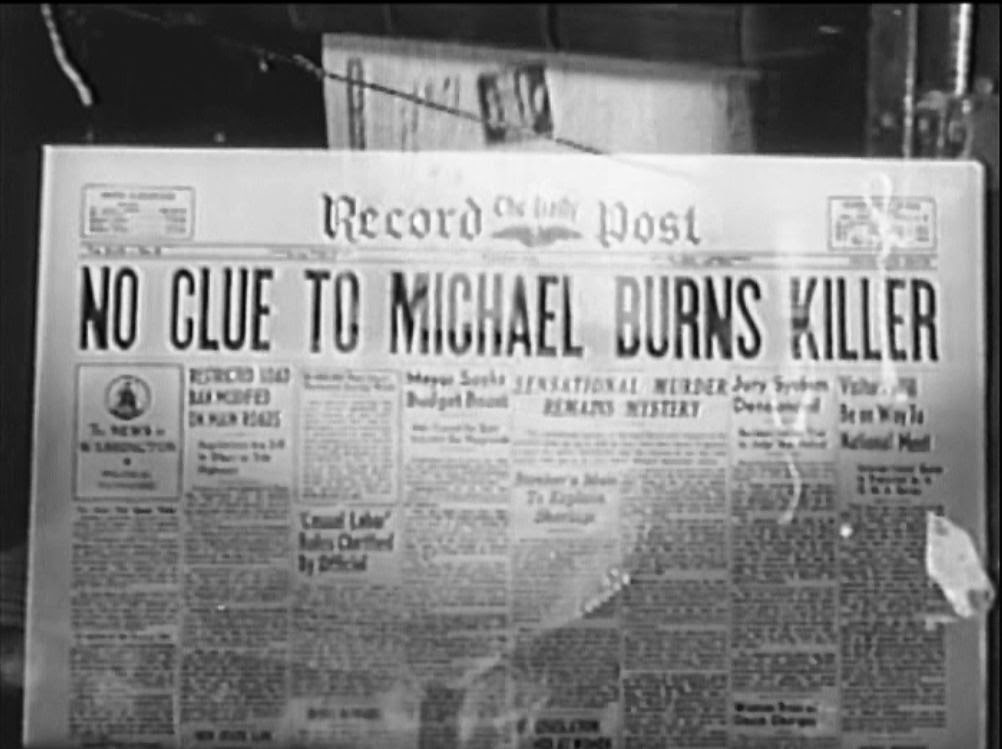
And with that pronouncement, the spider strikes the back of Burns’ neck…killing him instantly.  Before I get to the newspaper headlines of his demise, allow me to introduce Sombra.


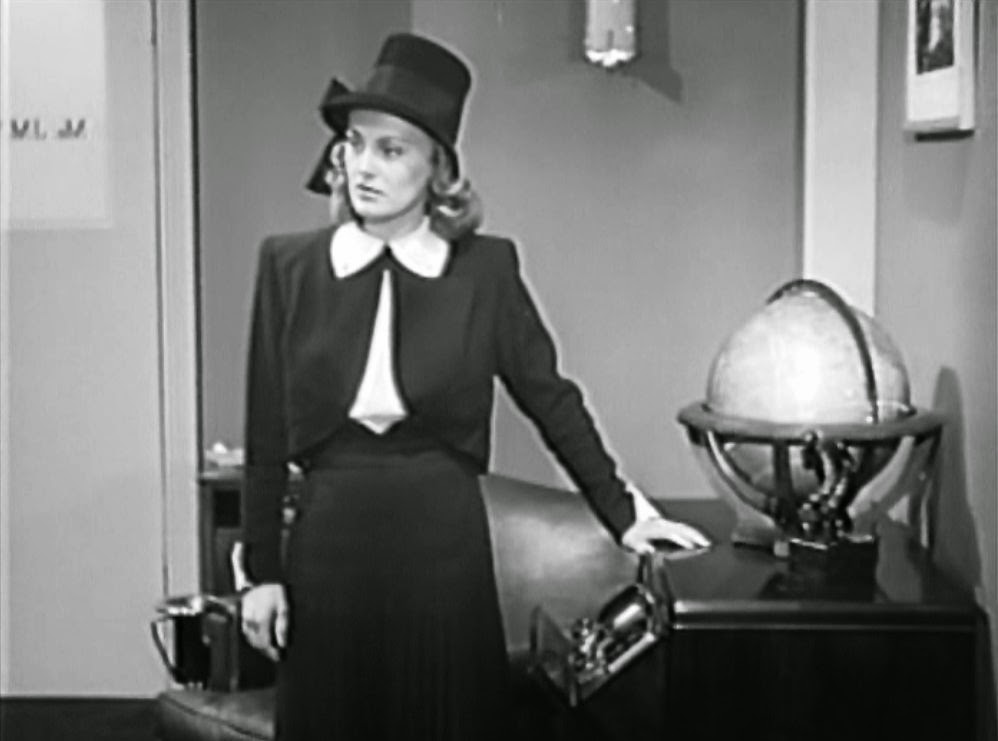
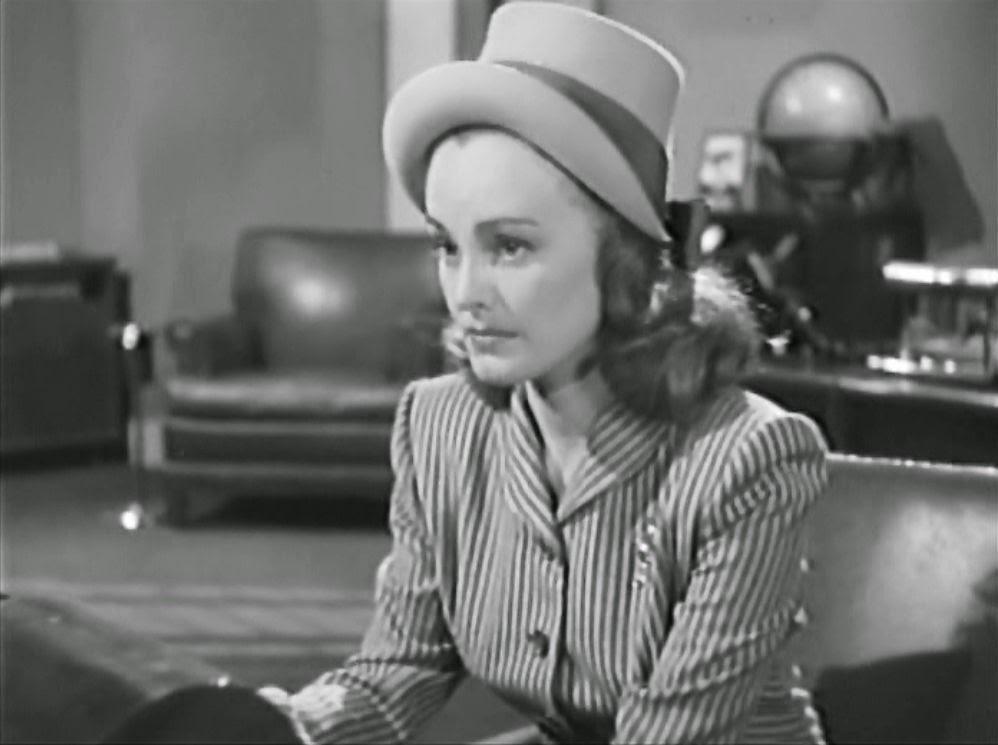
Hubba hubba…and might I also say…hubba.  Carol Forman was an aspiring ingénue who won a bit part in From This Day Forward (1946) after being spotted by the movie’s director, John Berry, in a theatrical company stage play.  She gained a contract at RKO and appeared in films like The Falcon’s Adventure (1946) and San Quentin (1946)…but her movie career really didn’t take off until she was cast as the villainess in the chapter play you are now reading.  Dubbed the “Queen of Serial Villainesses,” Forman liked playing the heavy (“Not everyone can be as convincing as I am,” she reminisced in 1984) and repeated her chapter play nastiness that same year as Queen Khana in Columbia’s Brick Bradford.  While that role might have been thankless, it paved the way for the part for which she’s perhaps best-remembered: the calculating Spider Lady in Columbia’s Superman serial in 1948.  Personally, I prefer Forman’s treachery in Widow (I don’t think she’s quite up to the task of squaring off against the Man of Steel) as well as Federal Agents vs. Underworld, Inc. (1949—a worthy candidate for future Serial Saturdays dissection), her second serial with Supe’s Kirk Alyn.  Carol and Kirk would team up one last time in Blackhawk (1952), a chapter play discussed in this space last week by TDOY guest reviewer Phil Schweier.


Burns’ murder makes the front page of several newspapers in No-Name City—but it’s at the offices of The Daily Clarion that crusading gal reporter Joyce Winters (Virginia Lindley) listens intently to a radio broadcast discussing the case.  Actress Lindley, who later went by “Virginia Lee,” made her movie debut with an uncredited part in 1946’s DragonwyckWidow was her first screen credit (and only serial), and she later appeared in such films as Parole, Inc. (1948) and The Daughter of Rosie O'Grady (1950).  She’s perhaps best known (though she does not receive billing) as Jeanie, the bar floozy who tries to pick up doomed hero Frank Bigelow before he gets a radioactive toddy in D.O.A. (1950), starring TDOY’s favorite film noir perspirer Edmond O’Brien.


Winters discusses the case with the Clarion’s editor, John M. Walker…played here by Gene Roth (billed as Gene Stutenroth).  It’s a good-guy role for Gene; he’s best remembered for his movie villainy in tons of B-westerns and serials (Ghost of Zorro, Captain Video, The Lost Planet) though he did trade off from time to time to play sheriffs in a lot of those oaters.  Roth was a foil to the Three Stooges during the Shemp years, with his most famous Stooges short being Dunked in the Deep (1949) (later remade as 1956’s Commotion on the Ocean), playing foreign spy Bortch (“Give me dat fill-um!”).

JOYCE: The police just aren’t getting anywhere…what’s The Clarion doing about it?
WALKER: I’ve engaged Steven Colt…

“Seems like a peculiar time to propose marriage, John…”

WALKER: …if anybody can solve a mystery, he can…
JOYCE: Steve Colt?  The mystery writer?
WALKER: Exactly!  Steve Colt is not only a well-known writer of mystery stories…but is also a student of criminology…his fiction detective, Rodman Crane, is one of the most able…
JOYCE: Phooey!

You watch your phraseology, young lady…

JOYCE: Steve Colt and Rodman Crane know ‘whodunit’ before the story even starts

A buzzer is then heard, signaling Walker’s intercom…and an office drone informs her boss that criminology student Steve Colt is here to see him.  As Steve’s welcomed into the office, all the tedious introductions are made so let’s look at the actor playing Colt briefly.


In the role of our hero is actor Bruce Edwards—the go-to individual for second leads in movies, particularly B-westerns.  His credited roles include Small Town Deb (1941), Marry the Bo$$'$ Daughter (1941) and Hitler—Dead or Alive (1942)…though he does have a nice part in one of my favorite John Garfield flicks, The Fallen Sparrow (1943).  Widow was Edwards’ only leading man role in a serial…and it’s not too hard to figure out why.  Truth be told, he and Lindley are the reason why the chapter play falls short of greatness: they’ll get on your nerves after a while.  (Author Hans J. Wollstein describes Bruce as the “phlegmatic hero” of the piece, which pretty much sums it up.)  Apart from a brief bit in a chapter of Captain Video, Edwards’ only other notable serial excursion is in Federal Agents vs. Underworld, Inc. (1949), reuniting him with villainess Forman.

JOYCE: The Chief expects great things of you…
WALKER: Joyce will be able to help you with your reports to The Clarion
JOYCE: My first story is going to be about Steven Colt…
STEVE: You better keep my name out of it for the present…the important thing is that people are being killed…we’ve got to find out who’s doing it and why… (To Walker) Did you get me that information we talked about?
WALKER: All I could get: Burns’ landlady was the last to see him alive…he left the house in a taxi…


Walker is interrupted by a noise emanating from this device, which I guess is some sort of teletype (though it could be a stock market ticker—“Amalgamated Ball Bearings up three-and-a-quarter…I’m killing it!”).  The editor stares at the paper, and announces: “Another Black Widow murder...a man named Meigs, found dead…”

“Get me a full report—also a picture of Burns,” replies Steve.  Have I watched too many Superman reruns, or is it unusual having the newspaper editor take orders instead of giving them?

STEVE: I gotta find that cab driver…
JOYCE: I’ve got pictures of Burns—come on!      


So Steve and Joyce begin their manhunt.  In speaking with the cab driver about Burns, they learn that the cabbie dropped him off “at Fourth and Main” and that he personally thought his fare “had a few marbles missing.”  “When I ask who does he think will win the Kentucky Derby—he says ‘Ask me tomorrow, I’ll know everything then.’”  The actor playing the cabbie, by the way, will go on to scale the heights of big and small screen villainy—he’s TDOY fave Robert J. Wilke.


Back in her parlor (kind of a whole spider-fly thing), Sombra reads aloud from a newspaper to her confederates in evilness.  Her henchman is “Ward” (first name Nick), which quite suits the actor playing him—Anthony Warde, the baddest henchie in all of serialdom.  Warde’s voluminous chapter play output includes Tim Tyler’s Luck (1937), Flash Gordon’s Trip to Mars (1938), Buck Rogers (1939), Dick Tracy vs. Crime, Inc. (1941), King of the Mounties (1942), The Masked Marvel (1943), Brenda Starr, Reporter (1945), King of the Forest Rangers (1946), Dangers of the Canadian Mounted (1948) and Radar Patrol vs. Spy King (1950).

The other gentleman answers to “Dr. (Z.V.) Jaffa”—who’s none other than veteran B-western baddie I. Stanford Jolley.  He’s also in Canadian Mounted, and additionally you’ll make his acquaintance in such serials as Tex Granger (1948), Congo Bill (1948), The Adventures of Frank and Jesse James (1948), Ghost of Zorro (1949), King of the Rocket Men (1949), Don Daredevil Rides Again (1951) and Captain Video (1951).

SOMBRA (reading): “…which has baffled the police…and Steven Colt, the well-known writer of detective fiction, will investigate the killings on behalf of The Clarion…”
WARD: Heh…this I gotta see!  A storybook gumshoe tryin’ to find us!

There is a dissolve, and our storybook gumshoe continues his investigation into Burns’ death with Joyce in tow.


JOYCE: Well—what would detective Rodman Crane do now?

“Probably give you a rap in the mouth, open-handed…”

STEVE: Well, he’d probably show the picture of Burns to all the regular denizens of the neighborhood…shoeshine artists, barbers…

Colt’s keen fictional detective insight zeroes in on a sign on one of the buildings…


Steve then pieces together that the ominous phrase Burns imparted to the cab driver—“Ask me tomorrow, I’ll know everything then”—means that he had an audience with Madame Sombra.  Whoa!  This guy is like Supercop!  As Joyce and he walk towards her establishment, they’re stopped by a flunky taking pictures with a camera who answers to “Blinky.”


The Black Widow was the serial swan song for character veteran Ernie Adams (he died not long after its release to theaters in November of 1947), who excelled at portraying stoolies and squealers.  He would occasionally land a good guy role like sidekick Rusty Fenton in The Phantom (1943), but most of the time he was on the wrong side of the law in chapter plays like Brenda Starr, Reporter (1945), Jungle Raiders (1945), Hop Harrigan (1946) and Son of Zorro (1947).  Blinky’s “hearing aid” is actually a transmitter—that he uses to contract Sombra, who answers his call at a radio console.

SOMBRA: Yes, Blinky?
BLINKY: There’s a guy on his way upstairs with a cute cookie
SOMBRA: Thank you, Blinky…


Sombra then walks over to a door and steps on a button on the floor, which allows her to enter her fortunetelling parlor and prepare for her visitors.  She presses another button near her chair, and Steve and Joyce mosey in.

SOMBRA: You’ve come to Sombra to learn of the future?
JOYCE: We’re interested in the past…not the future…
STEVE: I’ll handle this, Miss Winters…

“So stow it, cupcake…”  Steve grills Sombra on whether or not she’s ever seen Burns…


…and the coy villainess plays dumb.  (“He might have been here, but…so many come and go…both the living and the dead…”)  Steve then slips her some money, and he and Joyce file out.  Returning to her lair, Sombra gets on the horn again with Blinky the Snitch:

SOMBRA: Blinky…that was Steven Colt…watch them…turn up the volume…
BLINKY: Yes, Sombra…

The request for Blinky to turn up the volume is so Sombra can eavesdrop on any information that Steve and Joyce might share.

STEVE: Hey—you take pictures here every day?
BLINKY: I sure do!
STEVE: Ever take one of this man?

It’s Blinky’s turn to get a gander at Burns’ photograph…and he wisely plays it cagey as well.  But Steve remembers the card Blinky handed him before he and Joyce went up to see Sombra…


…and deduces that they might find some photographs to assist in their inquiries at the address.  Snapping off the transmitter, Sombra instructs Warde to head for Carter’s and relieve him of Blinky’s film—“This man Colt is dangerous!”


At the developer’s, Carter (played by B-western legend George Chesebro) hands over all of Blinky’s negatives with little regard to any legal niceties, adding “I hope they help you solve the case.”  


“I’ll solve your case!” snarls Ward, as he makes a grand entrance—and adds for good measure, “I’ll take that film!”  Steve throws it to Joyce, and the first of what I am certain will be many Republic donnybrooks gets underway.  (Carter will have none of these rough shenanigans—he reaches over and sounds a burglar alarm, forcing Ward to beat a hasty retreat after pummeling Steve to his satisfaction.)

A screen fade, and we’re back in Walker’s office as the editor, Joyce and Steve look through the pictures from Blinky’s roll of film.  “Looks like a washout, Sherlock,” needles Joyce.

STEVE: Wrong again, my dear Watson!  Take a look at the men in the background shaking hands—that one on the right is Burns!


JOYCE: You’re right, Steve!  It certainly is Burns!  Wait a minute—how about the other man?  Where’s that clipping with Meigs’ picture?

Walker hands her a newspaper clipping trumpeting Meigs’ death—and Joyce identifies the man pressing the flesh with Burns as “the latest victim of the Black Widow gang”…

STEVE: That cinches it!  Now this thing begins to form a pattern!  (To Walker) Get me the lowdown on every one of them—friends, families, various occupations, names of employers…everything!

“Look, Criminology Boy—I’m the editor…I’m the one who gives the orders!”  Walker may have already wised up by this time because in actuality he responds: “I’ll get my people on it right away!”  (I was beginning to wonder if that paper was just a one-man operation.)

Joyce, glancing at her watch, informs her nemesis that “it’s about time for my latest scoop—you wanna hear it?”  She switches on the radio in Walker’s office, just in time to hear a news announcer intone: “…which is the latest development on the Black Widow murders…Steven Colt, investigator for The Clarion, has discovered an important clue—which he hopes will bring him into direct contract with the murder gang…”

STEVE (switching off the radio): Did you turn that story in?
JOYCE: Well, you have to have news—that’s what you were hired for…
STEVE: It’s a good thing you’re not in the Army…or you’d be shot for giving information to the enemy…

Aww…the big lug can’t stay mad at you for long, Joycie.  The scene then switches back to Sombra’s lair…where our delectable damsel of depravity is also listening to the newscast with Ward and Jaffa.

SOMBRA: I told you he’d be dangerous…
JAFFA: But stupid…or he would not permit his movements to be broadcast…

Their conversation is interrupted by the loud sound of a gong.  “It’s my father—Hitomu,” Sombra observes as if in a reverie.  She orders Jaffa and Ward out of the room, and fiddles with a few knobs on this device…


…there is then a cut to a throne behind some curtains…and then…


Ala peanut butter sandwiches!  Sombra greets a surly-looking gent with “Welcome, father…do you bring us some messages?”

Hitomu is played by Theodore Gottlieb, who was getting by at this time with small roles in films like The Stranger (1946), So Dark the Night (1946) and The Lone Wolf in Mexico (1947).  He continued to work here and there, but his real fame didn’t start when he became a comic monologist (Gottlieb himself called it “stand-up tragedy”) named Brother Theodore, achieving much exposure in venues with Billy Crystal and on Late Night with David Letterman.  Theodore’s act was always—to me, anyway—an acquired taste…but he’s great as the constantly kvetching Hitomu, who visits with his progeny by means of a “teleportation device.”  (The reason for this goes unexplained.  Perhaps he had difficulty obtaining a visa.)

HITOMU: I grow impatient, Sombra…each moment of delay endangers our plan for world conquest…in every nation, scientists are seeking frantically for any device to combat this new atomic power…
SOMBRA: As yet without success…
HITOMU: Quite true…as yet…but before they do—we must strike the first decisive blows…Sombra…you have not yet secured Henry Weston’s formula for the fuel of his atomic rockets…
SOMBRA: Weston has been closely guarded…however, I have devised a plan which cannot fail to put it in my hands…
HITOMU: Execute your plan at once!  I shall wait for the report of your success…


And with that, Hitomu—in the words of the Firesign Theatre—waves his hands over his private parts and vanishes in the same cloud of smoke.  Now that we’ve established the MacGuffin of this imbroglio, Sombra claps twice to signal her wish for Ward and Jaffa to return.

SOMBRA: Hitomu orders that we strike at Henry Weston at once…is the mask of his secretary ready?
JAFFA: Yes, Madame—the mask and the wig…
SOMBRA: Get them…


Sombra then places a phone call to Weston’s laboratory—which is answered by his gal Friday, Ruth Dayton.  Ruth is played by Ramsay Ames—who’s no stranger here at Serial Saturdays, having appeared alongside Clayton “Hi-yo Silver!” Moore in G-Men Never Forget (1948), the first chapter play which we poked fun at once we unpacked in our new Blogger home.  Ames was a trés attractive dancer-singer who appeared in several Universal films including Crazy House (1943), Calling Dr. Death (1943), Ali Baba and the Forty Thieves (1944) and one of my personal favorites, the B-picture delight The Mummy’s Ghost (1944).  She made her serial debut in 1947’s The Vigilante, then did Widow and Forget before saying “no mas” to chapter plays.  Sombra poses as Western Union operator who gives Ruth a patently phony message.

RUTH: Arriving Union Station…two o’clock…meet me…important…signed, Aunt Nellie…thank you… (She hangs up, and the scene shifts back to Sombra’s hideout)
SOMBRA (to Ward): As simple as thatyou know what to do…
WARD: Right…

Ward goes out the door as Sombra enters a separate chambers that contains a closet filled with clothing.  She selects a bathrobe, then draws the curtains so Jaffa doesn’t get any funny ideas.  As she takes off that homina-homina-homina outfit, the scene switches to Doc J as he gently takes a wig off a dummy’s head while grabbing a piece of latex.  Outside the chambers, Jaffa says: “The mask and the wig, Madame Sombra.”  He’s allowed to enter m’lady’s boudoir, and she takes the items from him before sitting down in front of a lighted make-up mirror.  Meanwhile, Ruth is gathering her things in Weston’s office—scientist Weston is played by character veteran Sam Flint, who appeared in more movies and TV shows than you or I have had hot dinners.  His cliffhanger resume includes The Fighting Devil Dogs (1938), Spy Smasher (1942), The Masked Marvel (1943), The Phantom (1943), Who's Guilty? (1945), The Crimson Ghost (1946) and The Adventures of Frank and Jesse James (1948).

WESTON: I hope your aunt isn’t bringing any bad news…
RUTH: Oh, I’m sure it’s nothing like that…bye!

“Hey, waitaminnit—I don’t have an aunt Nellie!”  We return to Sombra’s makeup table as she places the mask on her face…then things get fuzzy and…


Shazam!  Sombra has transformed herself into an exact double of Ruth Dayton!  Science!  There is a knock on the outer door, and Jaffa opens it to allow Ward entry with the kidnapped Ruth.

WARD: You can scream all you want to now—no one will hear you!
RUTH (to Sombra): Who are you?  What is this place?


They’re cousins!  Identical cousins all the way—one set of matching bookends…different as night and day.  Sombra speaks, but while her appearance mimics Ruth’s, she’s still working on the vocal impression.

SOMBRA: As far as Mr. Weston is concerned, I’m his secretary—Ruth Dayton…
(Ruth starts toward Sombra, but is held back by Ward.  Sombra approaches Ruth.)
RUTH: You mean you hope to impersonate me?  But that’s preposterous—in spite of your disguise, your voice alone would betray you!
SOMBRA (flawlessly mimicking her voice): “That’s preposterous—in spite of your disguise, your voice alone would betray you!”

Well, so much for that.  Sombra-as-Ruth instructs Ward to bring her into the changing room so that she can steal Ruth’s clothes.  And as Sombra puts the finishing touches on her clever disguise, we fade back to Walker’s office.

STEVE: Well, that’s the story—Michael Burns was formerly a guard at the first atomic bomb experiments in which Henry Weston participated…
WALKER: Milton Meigs, the cook, was once employed by Weston…and Lana Larson had been his housekeeper!
STEVE: Exactly—five people formerly employed by or connected with Henry Weston are murdered with the same poison!
JOYCE: You still don’t know why
STEVE: You should read columns in the paper other than your own
JOYCE: Then we should go see Weston at once!
STEVE: Not weI

“You stay here and make sandwiches and coffee, honeybun.”  Steve asks Walker to keep this out of the paper and off the radio, and then departs for his appointment with Weston.  All Joyce has to do is look at her editor with soulful puppy-dog eyes and he melts like butter.  “All right…go ahead,” he says, making a shooing gesture with his hands.  (“But if Colt asks, you hit me over the head with my news ticker…”)

In a dissolve, we watch as Sombra-as-Ruth returns to Weston’s office.  Weston is glad to see his secretary, and she informs him that “Aunt Nellie” gave her some valuables to take care of—would he mind putting them in his safe?  And then this guy shows up:


Say hello to Tom Steele, everybody!  Tom was in our last Serial Saturdays presentation of (Big) Government Agents vs. Phantom Legion and while he’s primarily Bruce Edwards’ stuntman in Widow, he also plays three separate roles in three separate chapters.  (As you can see in the above screen capture, this is the one that requires him to wear a fake moustache.)  As “Bard,” he enters Weston’s lab just as the inventor has opened the safe and tells him “Get your hands up, Weston!”

WESTON: Ruth!  What’s the meaning of this?
SOMBRA: We need your rocket fuel formula…get over there!  (She pushes him aside and starts rifling through the safe to locate the formula.  When she finds it, she’s interrupted by a knock on the door.)  Gag him!

Bard takes Weston behind a screen while Sombra sees who her visitor is—it’s Colt, who asks to see Weston.  Sombra-as-Ruth tells Colt that Weston isn’t in right now (fibber!) but as you can see in this screen cap…


…Bard has foolishly left a coat rack within Weston’s reach so he can kick it with his foot and alert Steve that something is rotten in Denmark.  He shoves Sombra-as-Ruth aside as the screen falls down, revealing Bard—a brief bit of gunplay is exchanged before Colt shoots and kills the henchman dead.  Sombra decides a hasty retreat is in order.


“Stop that girl!” Weston cries out as Steve checks to make sure he’s okay.  “She’s got the formula for my rocket fuel!”  With the grace of a gazelle, Steve is out the door and onto the street in time to see Sombra getting away with Ward at the wheel.


As the car chase is underway, Sombra has removed her mask and wig in the back seat.  Colt continues to follow them, so she instructs her goon to radio a man named Slade that Steve is gaining on them.


Slade, played by ace stuntman Ted Mapes, is disguised as a truck driver—and he’s instructed by Slade to “take care” of the pursuing Colt.  He maneuvers his truck out onto the road after Ward & Sombra speed by—causing Steve to swerve and run right into a gas station that blows up real good!

The Laurel & Hardy Blogathon: Way Out West (1937)


The following essay is Thrilling Days of Yesteryear’s contribution to The Laurel & Hardy Blogathon, hosted today by MovieMovieBlogBlog in honor of the annual Oliver Hardy Festival held in Harlem, GA on the first weekend in October (this year it falls on October 4, hence the scheduling of the ‘thon).  It must be stressed that this blogathon is not related to nor endorsed by the Festival (I would, however, urge all L&H fans to make a pilgrimage to the Harlem museum at least one time in your life), and for a full list of participants and topics discussed click here.


The time period is the Gay Nineties, and in the small Western town of Brushwood Gulch, the locus of entertainment can be found in a saloon run by Mickey Finn (James Finlayson), whose wife Lola Marcel (Sharon Lynne) is the resident chanteuse.  Finn and Lola are guardians to Mary Roberts (Rosina Lawrence), whose father left her in their care when she was quite young.  Mary and her caretakers are not aware of this…but their lives are about to change with the arrival of two “desert rats” in town.

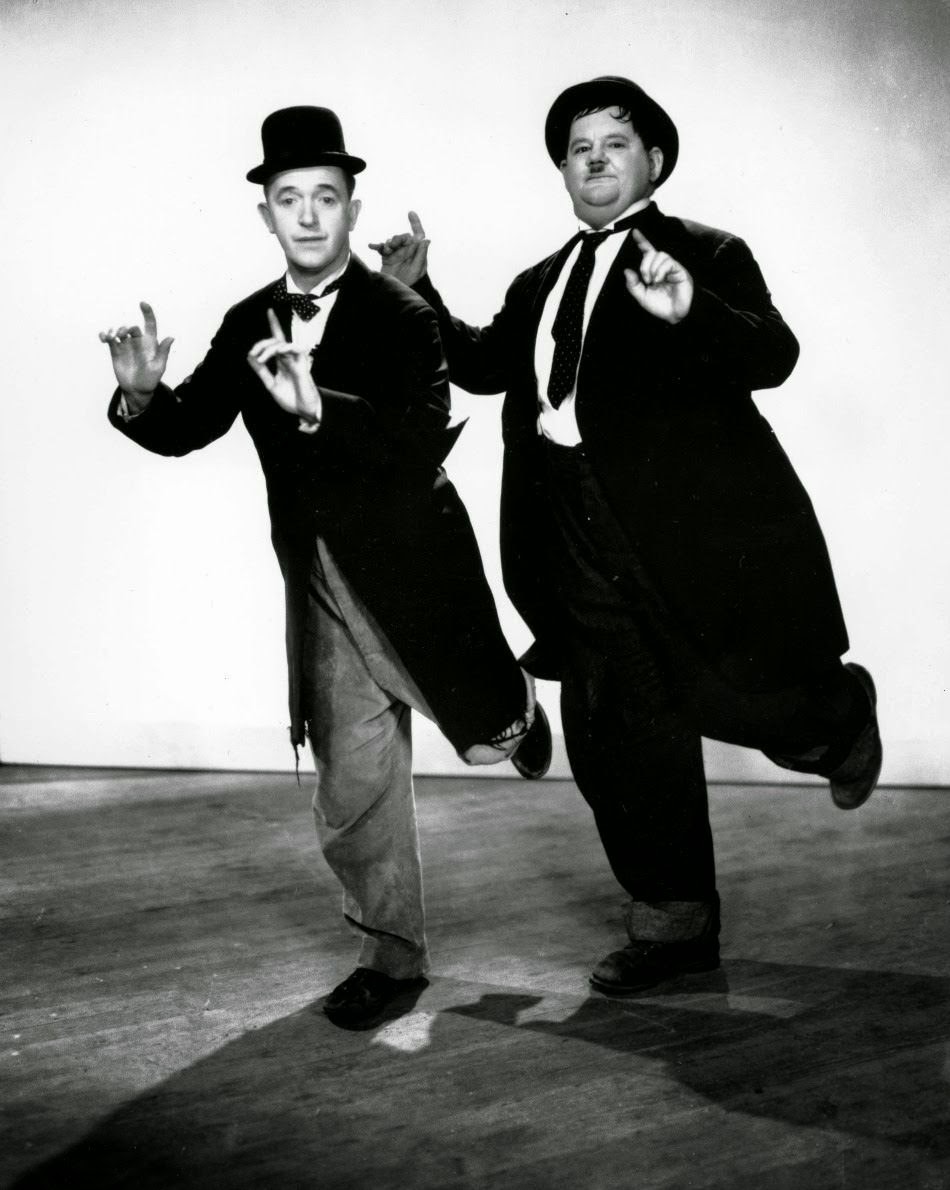
A screen capture of what I believe to be the reason why I return to Way Out West over and over again...there was never a more beloved team in all of cinema.

Stan (Laurel) and Oliver (Hardy) touch down in Brushwood Gulch (after an awkward encounter with the wife [Vivien Oakland] of the town’s sheriff [Stanley Fields]) to present Mary with a deed to a gold mine left to her by her deceased father.  Since neither Stan nor Ollie have ever met Mary, the greedy Finn concocts a scheme with Lola whereupon she will pretend to be the heir, and our heroes unwittingly hand over the title of the mine to her.  When they finally realize their mistake, the duo valiantly attempt to retrieve the deed but are unsuccessful.  Furthermore, they’re forced to high-tail it out of town when the grudge-holding sheriff arrives on the scene.

Undaunted, Stan and Ollie make a second effort to right the wrong by breaking into the saloon that night; despite the team’s noisy efforts, Finn and his wife are slow to realize that they’re being visited by home invaders.  It’s at that time that our heroes also encounter Mary, and an explanation of what’s transpired is passed along to her.  Laurel & Hardy finally manage to retrieve the gold mine deed, and the two of them (joined by Mary) make plans to head south as the film concludes.

Every feature film featuring the greatest movie comedy team of all time is revered by L&H fans…though there is often spirited discussion as to which movie is their best.  A consensus has gathered around their 1933 outing Sons of the Desert (the title of which inspired the team’s fan club), which film historian William K. Everson once described as “subtler if not funnier.”  But Everson was also quick to remind folks that Way Out West (1937) “must rank as the best of all the Laurel & Hardy features.  Not only is it pure, unadulterated Laurel & Hardy, with no time wasted on subsidiary plotting or romantic or musical ‘relief,’ but it is also a first-rate satire of the western genre…”  Way Out West is, hands down, my favorite Laurel & Hardy film.

It’s essentially a B-picture (though because it was released by MGM, it’s technically an A-minus picture) that pokes fun at B-pictures—in this case, the popular movie genre of the Western; the movie takes the hoariest of Western clichés—the gold mine falling into the hands of the villains—and simply goes to town with it.  Glenn Mitchell once observed: “…Way Out West differs from most comic westerns by actually parodying a genre rather than merely using a western setting.  Mel Brooks' more recent Blazing Saddles attempts the same but is over reliant on self-conscious dialogue references and suffers from a tendency to stray from the target.  The success of Way Out West may owe something to Stan Laurel's early experience in parody; similarly Oliver Hardy's earlier work in silent westerns would have contributed.”

The person responsible for conceiving what became Way Out West?  Well, that’s open to discussion.  Producer Hal Roach had planned a vehicle for his female comedy team of Patsy Kelly and Lyda Roberti entitled Girls Go West in March of 1936, but it never came to fruition (I would have paid to see that, to be honest).  Virginia Ruth Rogers, the second wife of Stan Laurel, also laid claim to initiating the project by insisting her husband and his partner tackle a “horse opera.”  None of this really matters in the long run: filming on Way Out West got underway on May 4, 1936 after writer Felix Adler turned in a script he prepared with star Stan Laurel…with veteran gag writers Charley Rogers, Arthur Vernon Jones and Jack Jevne making additional contributions as well.  James W. Horne, who had previously guided The Boys in the features Bonnie Scotland (1935) and The Bohemian Girl (1936), was all set to direct.

Way Out West was originally titled You’d Be Surprised—but that name had to be discarded because a 1926 Raymond Griffith comedy had already laid claim to it.  Then it became Tonight’s the Night, but 20th Century-Fox informed the Roach Studio “not so fast, podnuh.”  The name In the Money also had to be vetoed, because a small studio called Chesterfield had used it in 1933.  It was James Parrott, a former director at the studio whose problems with substance abuse found him toiling as a gag writer who came up with Way Out West—though Parrott (the brother of Roach star Charley Chase) apparently forgot that WOW was also the title of a comedy he himself had appeared in at the studio in 1920.  (In addition, it was used for a William Haines MGM feature in 1930…and a 1935 Educational two-reeler with The Cabin Kids.)  One title considered for the film that was discarded for unclear reasons was They Done It Wrong, a reference to Mae West’s 1933 comedy She Done Him Wrong—I kind of wish they had gone with that one.  But Way Out West is also a jokey title—originally inspired by the D.W. Griffith-directed Way Down East.

Way Out West may spotlight “pure, unadulterated Laurel & Hardy”…but it’s interesting to note that a full reel of the movie goes by before we’re introduced to The Boys; we then find them making their way to Brushwood Gulch by mule (the mule is Dinah, with whom they also worked in The Music Box; Dinah also plays “Algebra” in the classic Our Gang short Honkey Donkey), and the luckless Ollie finds the only sinkhole for miles as the two ford a steam (a wonderful gag that is repeated twice more in the film).  The duo is able to stop a stagecoach headed for their destination (Stan gets the stage to come to a screeching halt by “showing a little leg” in a sly It Happened One Night reference)…and once they arrive in town, they set about their Good Samaritan work by attempting to inform Mary Roberts of her inheritance.

Stan and Ollie’s arrival is supplemented by one of many reasons why I love Way Out West so dearly.  The Boys do a soft-shoe shuffle to the strains of At the Ball, That’s All performed by The Avalon Boys (an aggregation comprised of future Oscar nominee Chill Wills, Art Green, Walter Trask and Don Brookins).  The film’s original script makes no mention of the routine (the Avalon Boys were simply supposed to do their stuff), and it’s believed the dance was probably improvised between takes and then filmed for cinematic immortality.  The sequence is unquestionably one of Laurel & Hardy’s best-known (you can throw a piano at an Internet .gif of the dance and hit it) and the great thing about it is that its charm lies in how it looks so spontaneous and unrehearsed…yet you know both men worked so hard to perfect its utter unpretentious joy.  Movie musical fans are welcome to their elaborate MGM routines—I’ll take Stan and Ollie’s sublime hoofing any day of the week.

In attempting to make small talk with their fellow stagecoach passenger (Vivien Oakland), Hardy blurts out: "A lot of weather we've been having lately!"  (Yes, I use that all the time in real-life conversation.)
The Boys worked a second memorable musical number into the proceedings in a later sequence when Ollie joins in with Avalon Boys member Walter Trask (both L&H historians Dick Bann and Randy Skretvedt believe it’s Trask) on a rendition of The Trail of the Lonesome Pine, which then leads to glorious harmony with his friend Mr. Laurel.  In 1975, the soundtrack of this transcendent duet was released as a single that went all the way to #2 on the U.K. pop charts.  (“Duet” is technically not the right word here—it’s more like a quintet; in addition to Trask, Laurel and Hardy, Chill Wills can be heard [as Stan’s bass voice] as well as Rosina Lawrence [providing Stan’s soprano].)  Way Out West is quite a tuneful little picture, with additional musical numbers like Will You Be My Lovey-Dovey? (performed by Lynne in a Mae West-inspired saloon sequence) and the impossible-to-get-out-of-your-head I Want to Be in Dixie (“D-I-X…I know how to spell it!”).  Way Out West may have been a lowly B-picture, but its music (courtesy of longtime Roach Studios composer Marvin Hatley) scored an Academy Award nomination for Best Score—a rather prestigious accomplishment.  (“It certainly is!”)

But here’s the true test of Way Out West’s status as a classic comedy: it’s just so doggone funny.  So many unforgettable sequences: Lynne trapping Stan in her “boudoir” and trying to wrest the deed away from him (in a hilarious role reversal, Stan has put the valuable paper in his shirt and Lynne aggressively “molests” him to retrieve it, prompting the comedian’s infectious laughter as he’s tickled); Stan demonstrating to Ollie how he’s able to create a flame (like a cigarette lighter) by flicking his thumb (Oliver is both amazed and frightened when he’s able to duplicate this feat); Oliver forcing Stan to “eat his hat.”  The dialogue is also hilarious: my favorite is when Stan unthinkingly reveals to Finn the reason why they need to see Mary and Oliver indignantly responds as he gives his partner a shove: “Now that he's taken you into our confidence…”

I also get delighted during the sequence when Stan and Ollie are trying to break into the saloon and Stan gets the (not-at-all) bright idea to hoist Ollie up to the second floor roof with a rope.  Dangling in mid-air, Ollie watches helplessly as Stan innocently lets go (“Wait until I spit on me hands…”) and in crashing to Earth, his considerable girth makes an impression in the ground.  Stan attempts to tidy up his partner by brushing him off and at one point steps into the rut Ollie’s created to do so.  That sort of subtlety from Laurel & Hardy just cements my affection for the duo.

“The charm of that hilarious, marvelous film is simply unending,” wrote L&H biographer John McCabe.  I think McCabe hits upon the reason why so many fans revere Way Out West—the key word here is “charm.”  To be honest, that also sums up the universal appeal of the duo; you can make strong cases for any number of The Great Movie Comedians as to why their work may be superior to that of their peers, but the beauty of Laurel & Hardy is that they were unquestionably the most beloved comedy team in the history of cinema.  They radiated a timelessly charismatic appeal, and I’d be hard-pressed to think of anyone who’s been able to do that since.  Sure, they squabbled and fought like children—punching and hitting and calling of names—but there was never any doubt that these two men were the best of friends, holding on to one another as they faced what life was determined to dish out.  I also can’t imagine a scenario where I would be limited to just one L&H movie for the rest of my life…but if such a tragedy were to occur, Way Out West would win in a walk.